Pigments, Binders, Varnishes, and Artists’ Materials
What does ultraviolet light cause color to fade?
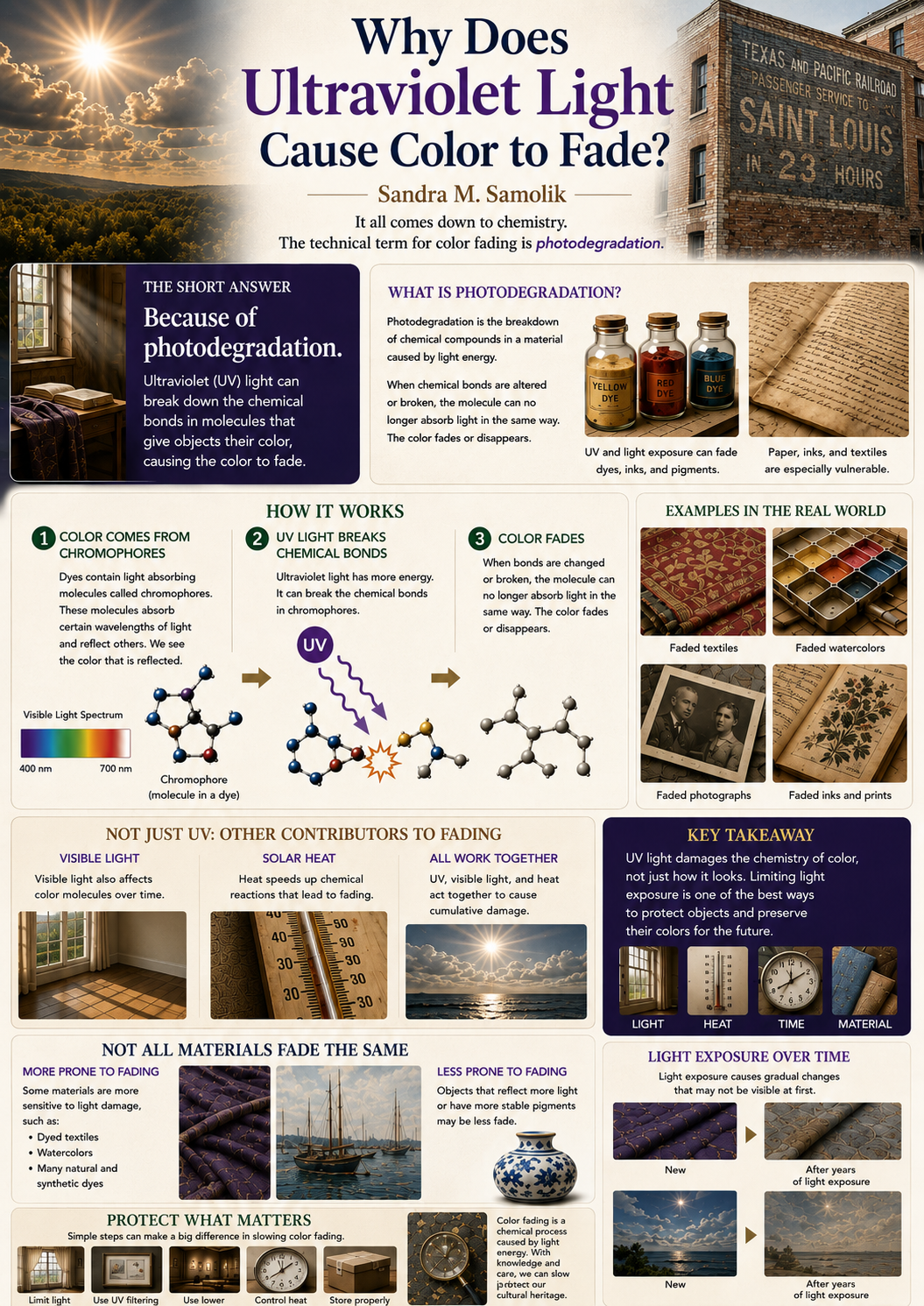
Why Does Ultraviolet Light Cause Color to Fade?
The answer lies in photodegradation.
Color is fundamentally connected to chemistry. Chromophores are the light absorbing structures within molecules that are responsible for color. When materials are exposed to ultraviolet radiation, this energy can alter or break chemical bonds within these structures. As their molecular structure changes, their interaction with light changes as well, resulting in fading or loss of color.
UV radiation is not the only factor. Visible light and heat can also contribute to deterioration, and their effects accumulate over time.
This is particularly important in cultural heritage preservation. Watercolors, dyed textiles, photographs, works on paper, inks, and many organic colorants can be highly sensitive to prolonged light exposure.
Understanding why colors fade helps us make better decisions about exhibition, storage, environmental control, and preventive conservation.
Light does not simply change how an object looks. It can change the chemistry of the materials from which the object is made.
© 2026 Sandra M. Samolik. All rights reserved. Text and figures on this page may not be copied, downloaded, or redistributed without prior written permission.