Pigments, Binders, Varnishes, and Artists’ Materials
Sienna - From Natural Earth to Artist's Pigment
Burnt sienna is not simply dried raw sienna. It is created through heat.
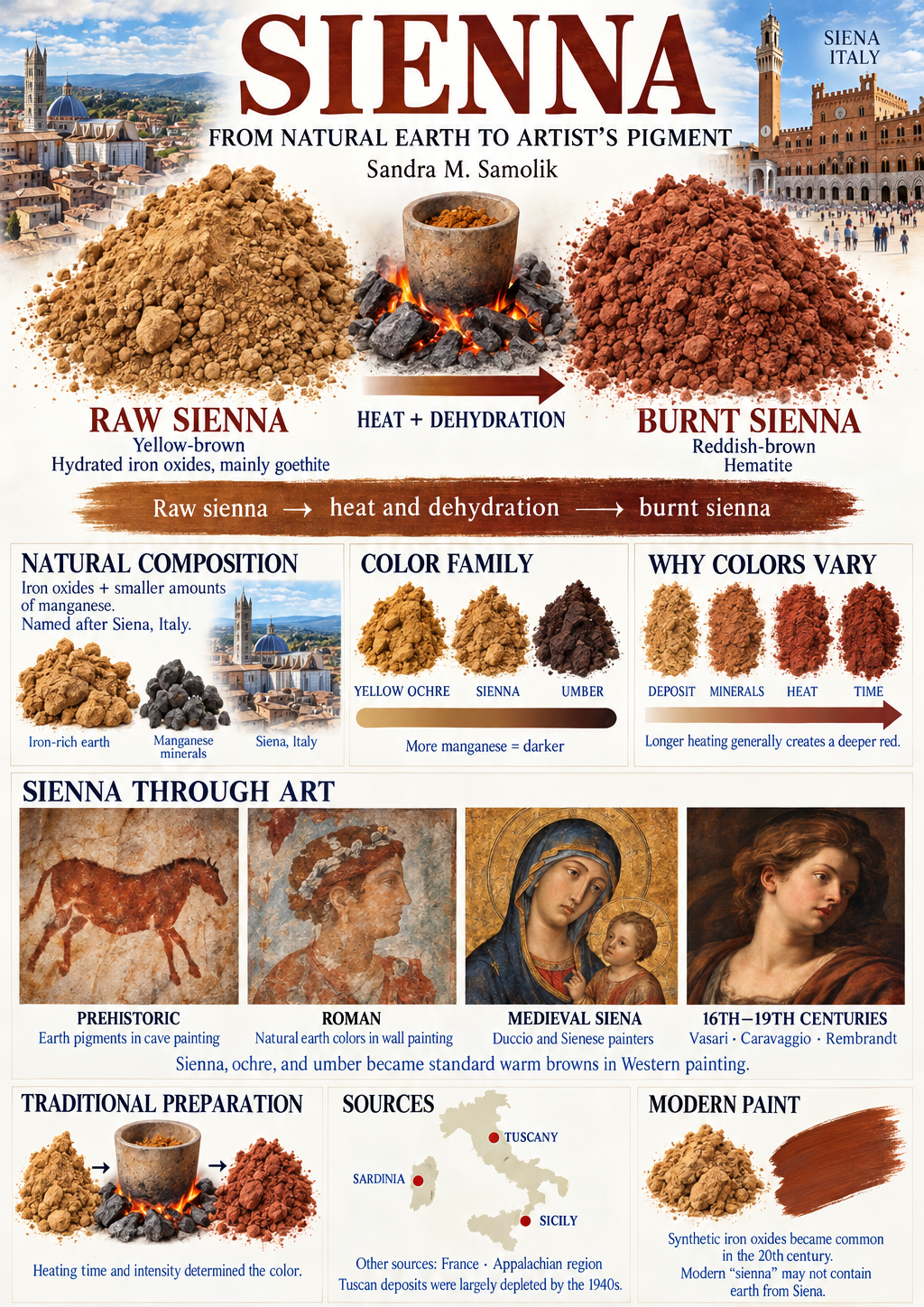
Burnt sienna is not simply dried raw sienna. It is created through heat.
Raw sienna is a natural yellow-brown earth pigment composed primarily of hydrated iron oxides, especially goethite, together with smaller amounts of manganese compounds. Its name derives from Siena, Italy, a historic source of the pigment.
To produce burnt sienna, the raw earth is heated in a refractory crucible, kiln, or furnace. This process, known as calcination, removes chemically bound water and converts part of the yellow-brown goethite into reddish hematite. The result is the characteristic warm, red-brown color of burnt sienna.
The final color is not standardized. It can vary according to:
• The mineral composition of the deposit • Iron and manganese content • Particle size • Heating temperature • Duration of heating
Longer or more intense heating generally produces a deeper red.
Earth pigments related to sienna are among the earliest colors used by humans. They appear in prehistoric painting and later became important materials in Roman, medieval, Renaissance, and Baroque art.
Today, however, a paint labeled “sienna” may contain natural earth, synthetic iron oxide, or a mixture of pigments. The color name alone does not necessarily identify its material composition.
© 2026 Sandra M. Samolik. All rights reserved. Text and figures on this page may not be copied, downloaded, or redistributed without prior written permission.