Technical Art History
Reflectance Transformation Imaging (RTI): Enhancing Artefact Analysis
How RTI reveals surface texture, condition, and treatment changes beyond direct observation and raking-light photography.
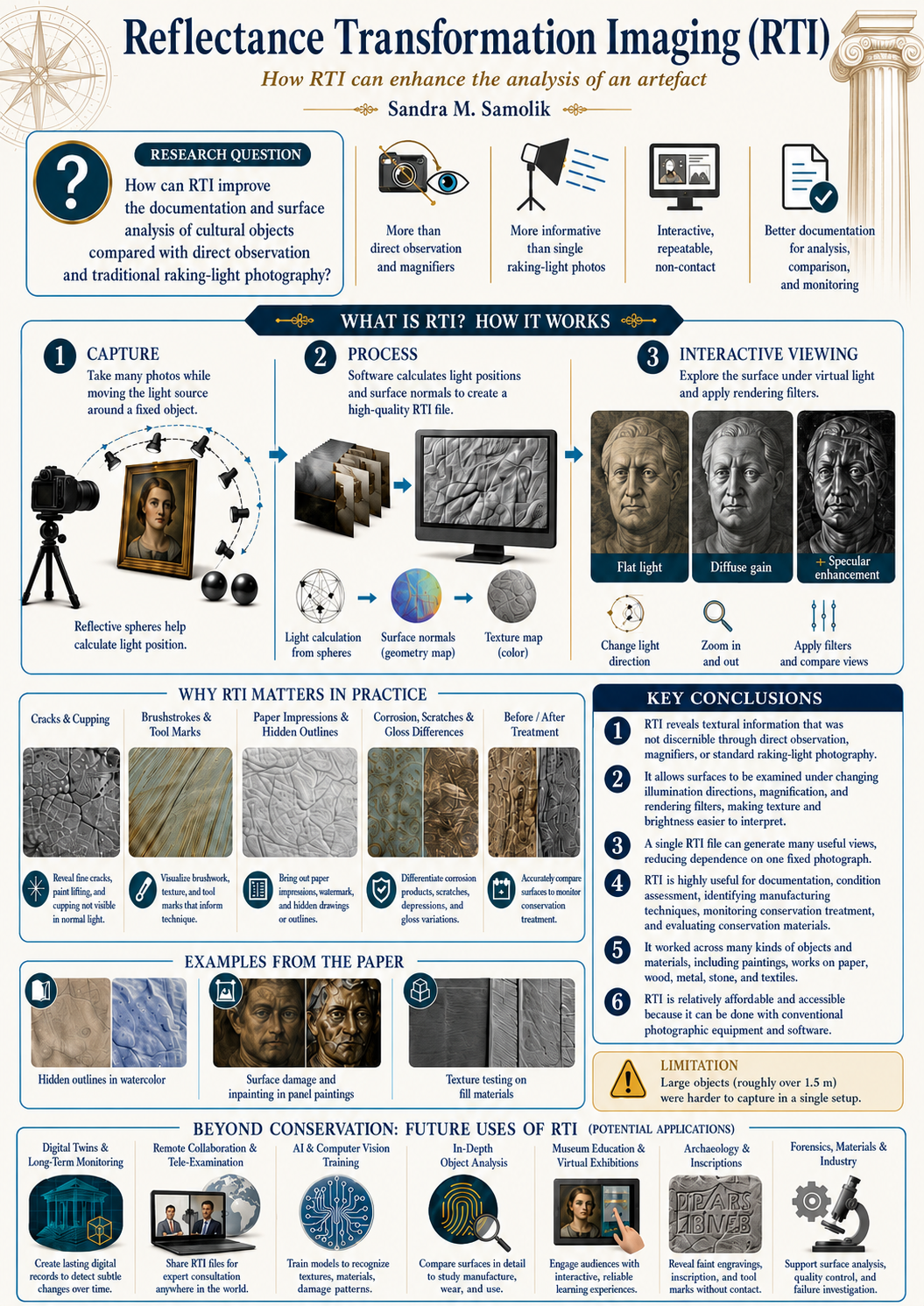
Reflectance Transformation Imaging (RTI) provides a powerful method for examining the surface of artefacts beyond what can be seen through direct observation, magnification, or conventional raking-light photography.
This post outlines how RTI enhances in-depth object analysis by revealing surface texture, material traces, condition issues, and treatment-related changes, making them more visible, comparable, and documentable. RTI is particularly valuable for researchers, conservators, curators, and technical art historians, as it allows for virtual relighting of an object from multiple directions. This capability enables the study of subtle features such as brushstrokes, tool marks, paper impressions, cracks, cupping, corrosion, scratches, gloss differences, surface deformation, and previous interventions.
In addition to conservation, RTI holds significant potential for digital heritage, provenance research, object-based research, museum documentation, remote expert consultation, AI-assisted pattern recognition, collections management, forensic object analysis, and the creation of long-term digital records.
While imaging methods like RTI are not substitutes for expert judgment, provenance research, or material analysis in art authentication and technical art history, they provide essential visual evidence that supports closer examination, improved documentation, comparative study, and more transparent interpretation.
© 2026 Sandra M. Samolik. All rights reserved. Text and figures on this page may not be copied, downloaded, or redistributed without prior written permission.