Digital Heritage
Provenance Research: At the Heart of the Digital Museum
Museums are evolving rapidly, but their core mission should not be overshadowed by digital transformation. While online collections, artificial intelligence, digital humanities, and data driven initiatives have expanded access to cultural heritage, they have also highlighted important challenges, including fragmented information, institutional silos, increasing specialization, and the need for sustainable collaboration.
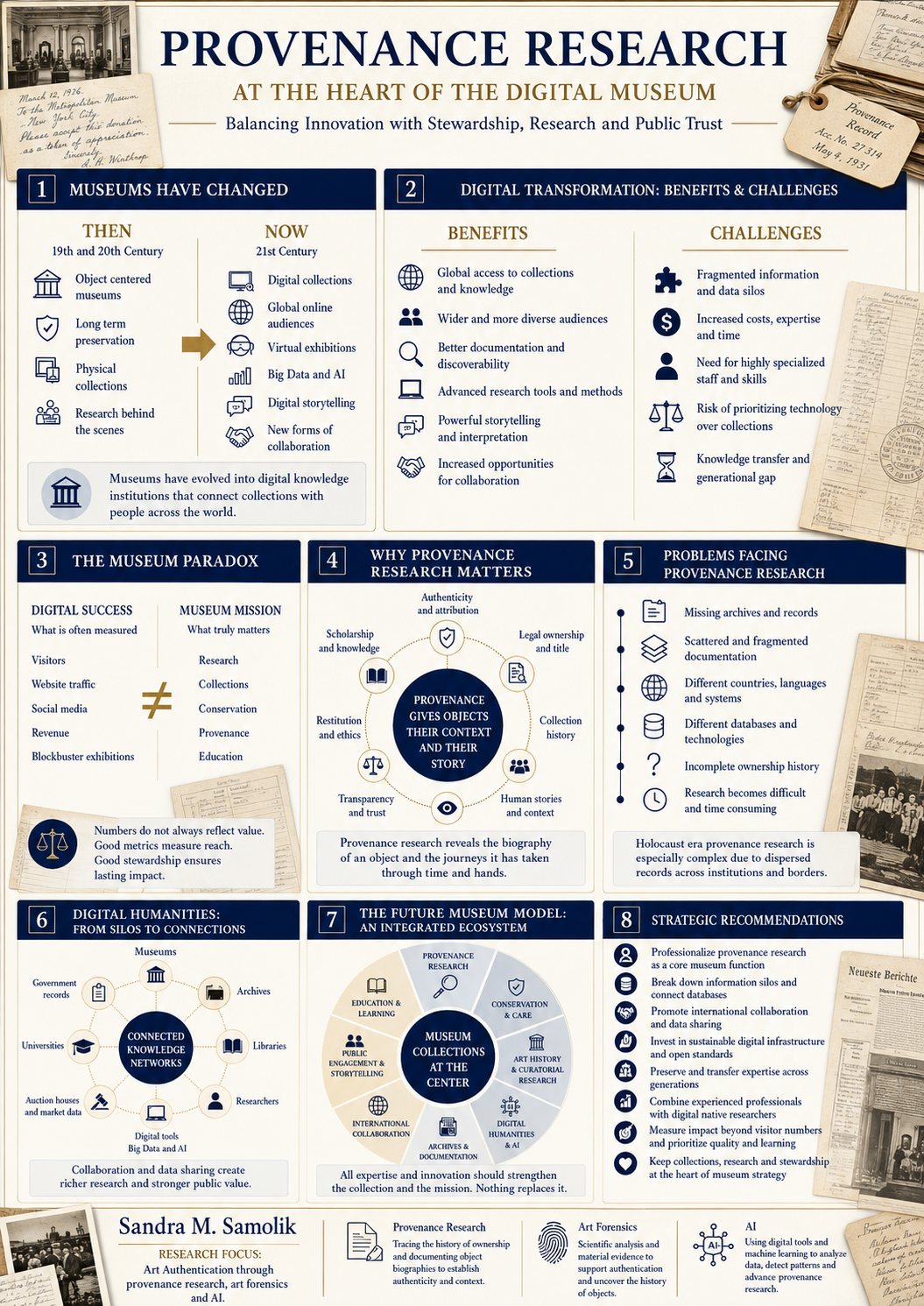
Museums are evolving rapidly, but their core mission should not be overshadowed by digital transformation. While online collections, artificial intelligence, digital humanities, and data driven initiatives have expanded access to cultural heritage, they have also highlighted important challenges, including fragmented information, institutional silos, increasing specialization, and the need for sustainable collaboration.
One message stood out to me while reading about these developments: "provenance research deserves to move from the back of the house to the front of the house". It is far more than documenting ownership histories. Provenance research strengthens authenticity, transparency, accountability, public trust, and our understanding of the cultural, historical, and human context of works of art.
As museums continue embracing new technologies, success should not be measured solely by visitor numbers, website traffic, or revenue. Long term impact is equally reflected in rigorous research, responsible stewardship, interdisciplinary collaboration, and the preservation of knowledge for future generations.
© 2026 Sandra M. Samolik. All rights reserved. Text and figures on this page may not be copied, downloaded, or redistributed without prior written permission.