Pigments, Binders, Varnishes, and Artists’ Materials
Painting Craquelure Patterns: Types of Cracks and Crack Patterns
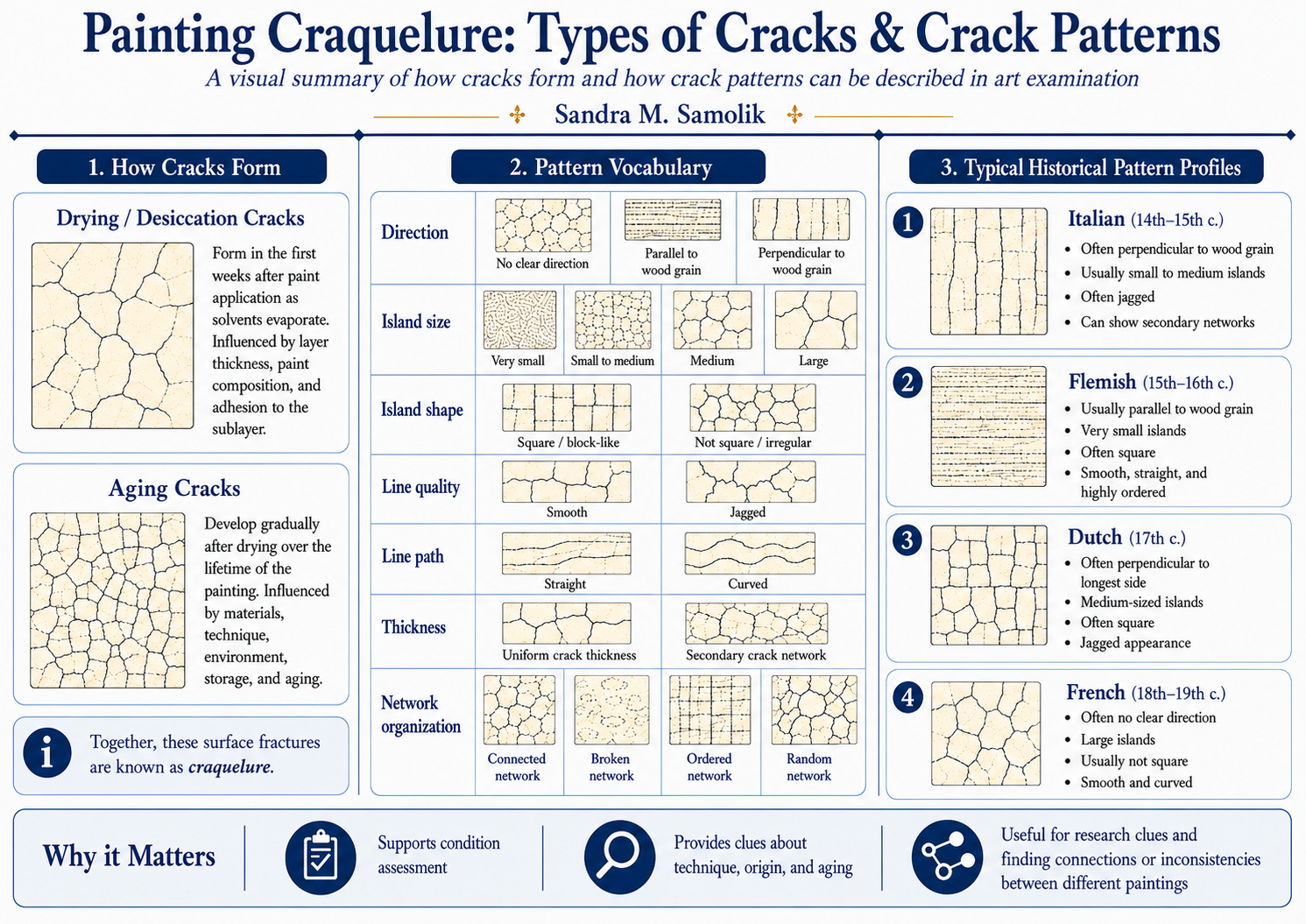
Craquelure, the network of cracks that develops on the surface of a painting, is more than a visible sign of age. It can also offer important research clues.
Craquelure, the network of cracks that develops on the surface of a painting, is more than a visible sign of age. It can also offer important research clues.
Crack patterns may reflect how a painting was made, how materials interacted over time, how the artwork aged, and how it was stored, transported, restored, or exposed to changing environments. In art conservation and technical art history, these patterns are often studied as part of a broader investigation into an object’s condition, material history, and possible connections to other works.
Different craquelure patterns can reveal useful information:
• drying and aging behavior of paint layers • material and technique-related differences • similarities or inconsistencies between paintings • condition and conservation history • possible links to period, workshop practice, support type, or preservation environment
For collectors, researchers, conservators, and art historians, this is especially important because visual surface evidence can support deeper questions: Does a painting’s aging pattern make sense? Do the cracks correspond with the supposed period, technique, or support? Are there inconsistencies that require further technical examination?
© 2026 Sandra M. Samolik. All rights reserved. Text and figures on this page may not be copied, downloaded, or redistributed without prior written permission.