Pigments, Binders, Varnishes, and Artists’ Materials
Painting Anatomy: Structure, Materials & Care
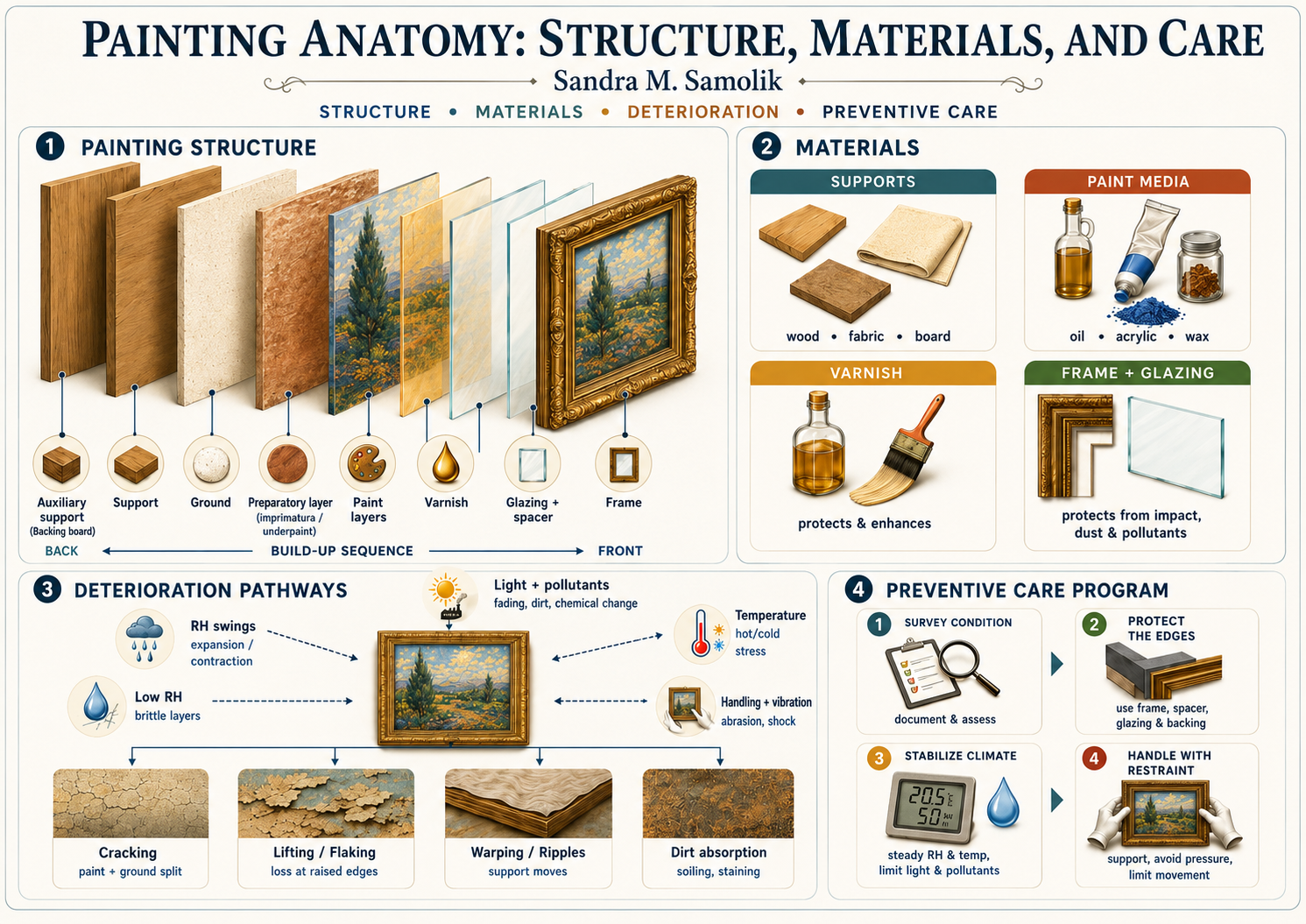
Understanding the structure of a painting is essential for meaningful research, conservation, and technical analysis.
A painting is not just an image on a surface. It is a complex layered object: support, ground, preparatory layers, paint, varnish, glazing, and frame all interact with each other over time. Each layer can influence how the artwork looks, ages, responds to its environment, and eventually deteriorates.
For painting analysis, this structural knowledge is crucial. It helps us interpret materials, artist techniques, previous restorations, hidden changes, and the causes of visible damage such as cracking, flaking, warping, dirt absorption, and surface change.
Damage is rarely random. It is often connected to environmental stress, especially RH swings, changes in relative humidity, as well as temperature changes, light exposure, pollutants, handling, vibration, unstable supports, and material incompatibility. When we understand these pathways, we can move from simply observing damage to explaining it, and, most importantly, preventing it. This infographic summarizes the anatomy of a painting and shows why structure, materials, deterioration, and preventive care must always be considered together. Research, conservation, and collection care all begin with one fundamental question:
What is the painting made of, and how is it changing over time?
© 2026 Sandra M. Samolik. All rights reserved. Text and figures on this page may not be copied, downloaded, or redistributed without prior written permission.