Pigments, Binders, Varnishes, and Artists’ Materials
Paint Binders
Understanding a painting begins with understanding what holds it together. While pigments usually receive the most attention, the binder is the component that determines how paint dries, ages, adheres to the support, and ultimately deteriorates over time.
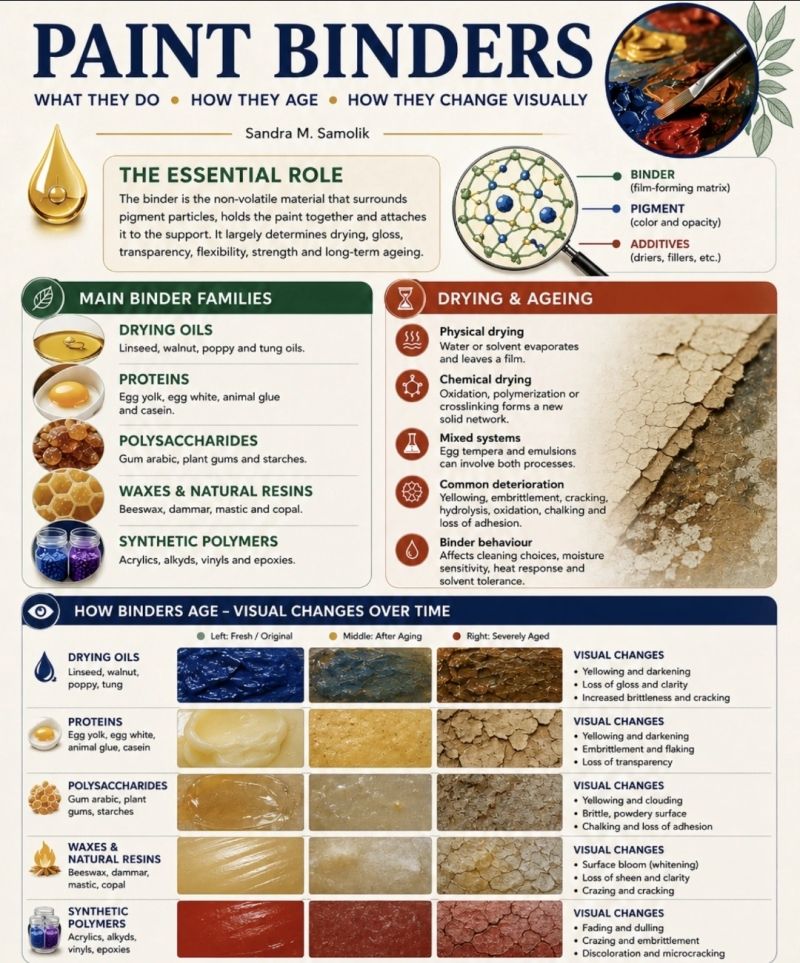
Understanding a painting begins with understanding what holds it together. While pigments usually receive the most attention, the binder is the component that determines how paint dries, ages, adheres to the support, and ultimately deteriorates over time.
From drying oils and proteins to plant gums, natural resins, waxes, and synthetic polymers, each binder follows a distinct ageing pathway. Yellowing, embrittlement, chalking, cracking, loss of gloss, whitening, and delamination are often direct consequences of changes within the binding medium rather than the pigment itself.
For conservators, conservation scientists, forensic specialists, and art historians, recognizing these visual ageing details is an essential first step in understanding a painting's material history. Careful visual examination, combined with microscopic and analytical investigation, provides valuable insights into original technique, past restoration campaigns, environmental exposure, and long-term preservation.
© 2026 Sandra M. Samolik. All rights reserved. Text and figures on this page may not be copied, downloaded, or redistributed without prior written permission.