Pigments, Binders, Varnishes, and Artists’ Materials
Organic and Inorganic Pigments
Pigments can be classified in many ways, but one useful distinction is between inorganic and organic pigments.
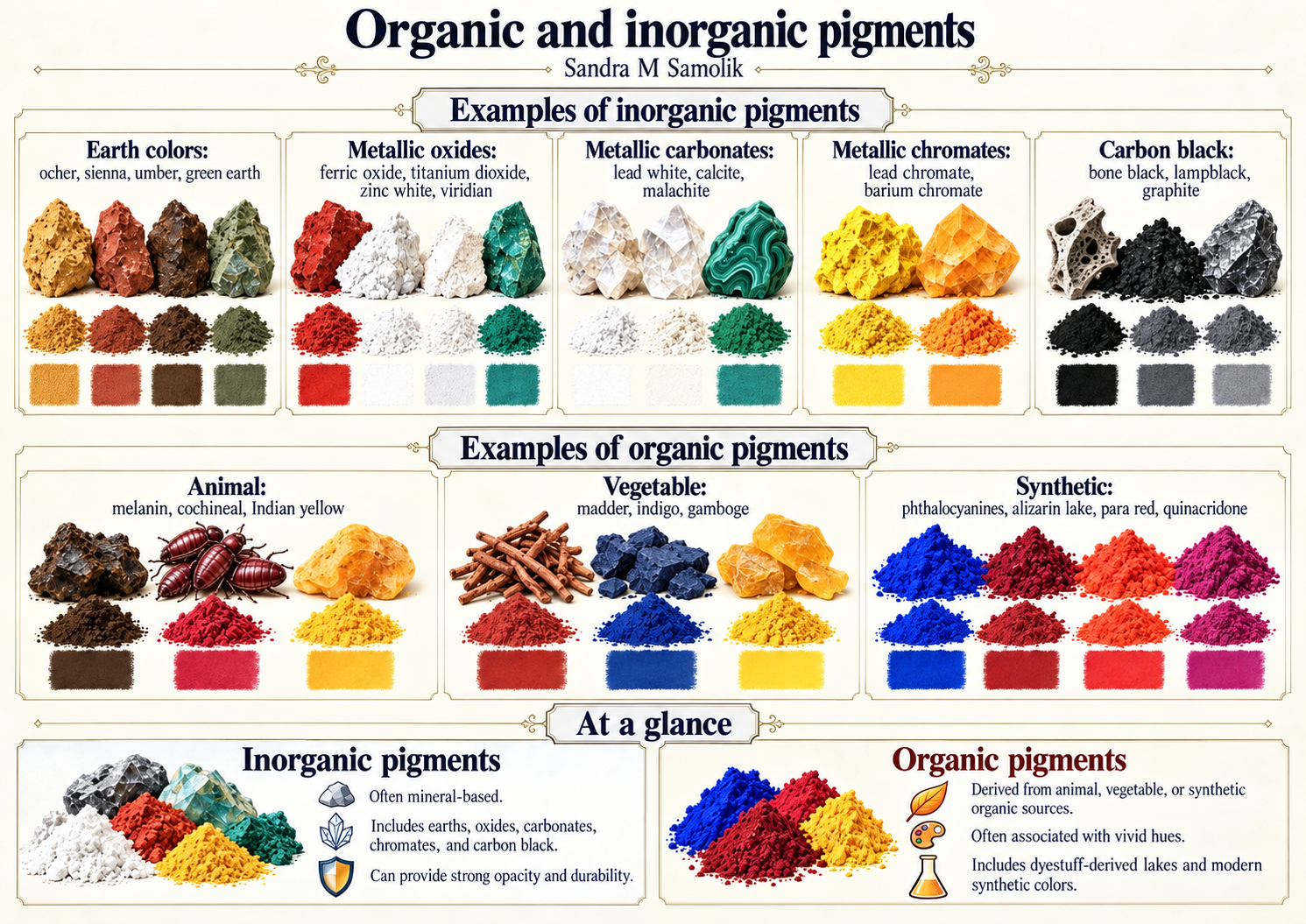
Inorganic pigments are generally mineral-based or derived from inorganic compounds. They include earth pigments such as ochres and umbers, metallic oxides, carbonates, chromates, and carbon blacks. Many are valued for their opacity, stability, and durability.
Organic pigments are based on carbon-containing compounds and may originate from animal, vegetable, or synthetic sources. Historical examples include cochineal, madder, indigo, and gamboge, while modern chemistry introduced highly saturated synthetic colorants such as phthalocyanines and quinacridones.
For conservation and technical art history, understanding pigment chemistry is important because composition influences color, aging, light sensitivity, chemical reactions, degradation, and analytical identification.
And, as always, the categories are useful frameworks rather than perfect historical boxes: pigment manufacture, processing, mixtures, and later conservation treatments can make the material reality of an artwork considerably more complex.
© 2026 Sandra M. Samolik. All rights reserved. Text and figures on this page may not be copied, downloaded, or redistributed without prior written permission.