Pigments, Binders, Varnishes, and Artists’ Materials
Naples Yellow
One of History's Most Enduring Synthetic Pigments
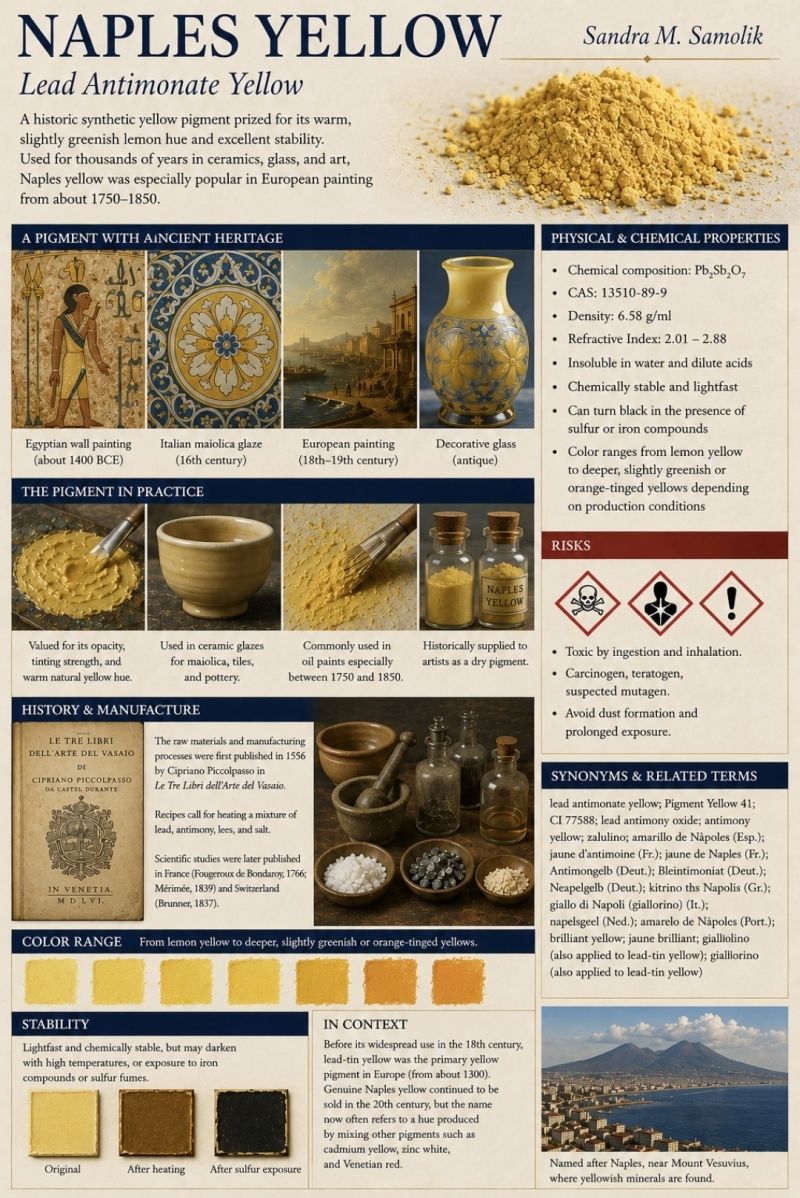
Naples Yellow: One of History's Most Enduring Synthetic Pigments
For more than 3,500 years, Naples Yellow (lead antimonate yellow) played an important role in the history of art, ceramics, and glassmaking. From ancient Egypt and Mesopotamia to Renaissance majolica and European paintings of the eighteenth and nineteenth centuries, this remarkable pigment demonstrates how artistic practice has long depended on advances in material science.
Unlike many naturally occurring pigments, Naples Yellow is synthetically produced, making it one of the earliest engineered pigments known to humanity. Its warm yellow tones, excellent opacity, and remarkable lightfastness made it highly valued by artists for centuries before newer synthetic pigments gradually replaced it during the nineteenth century.
Although genuine Naples Yellow is chemically stable under many conditions, it is also a lead-based pigment and therefore highly toxic, requiring careful handling during conservation and scientific analysis.
© 2026 Sandra M. Samolik. All rights reserved. Text and figures on this page may not be copied, downloaded, or redistributed without prior written permission.