Pigments, Binders, Varnishes, and Artists’ Materials
Can storage history be read from the surface of a painting?
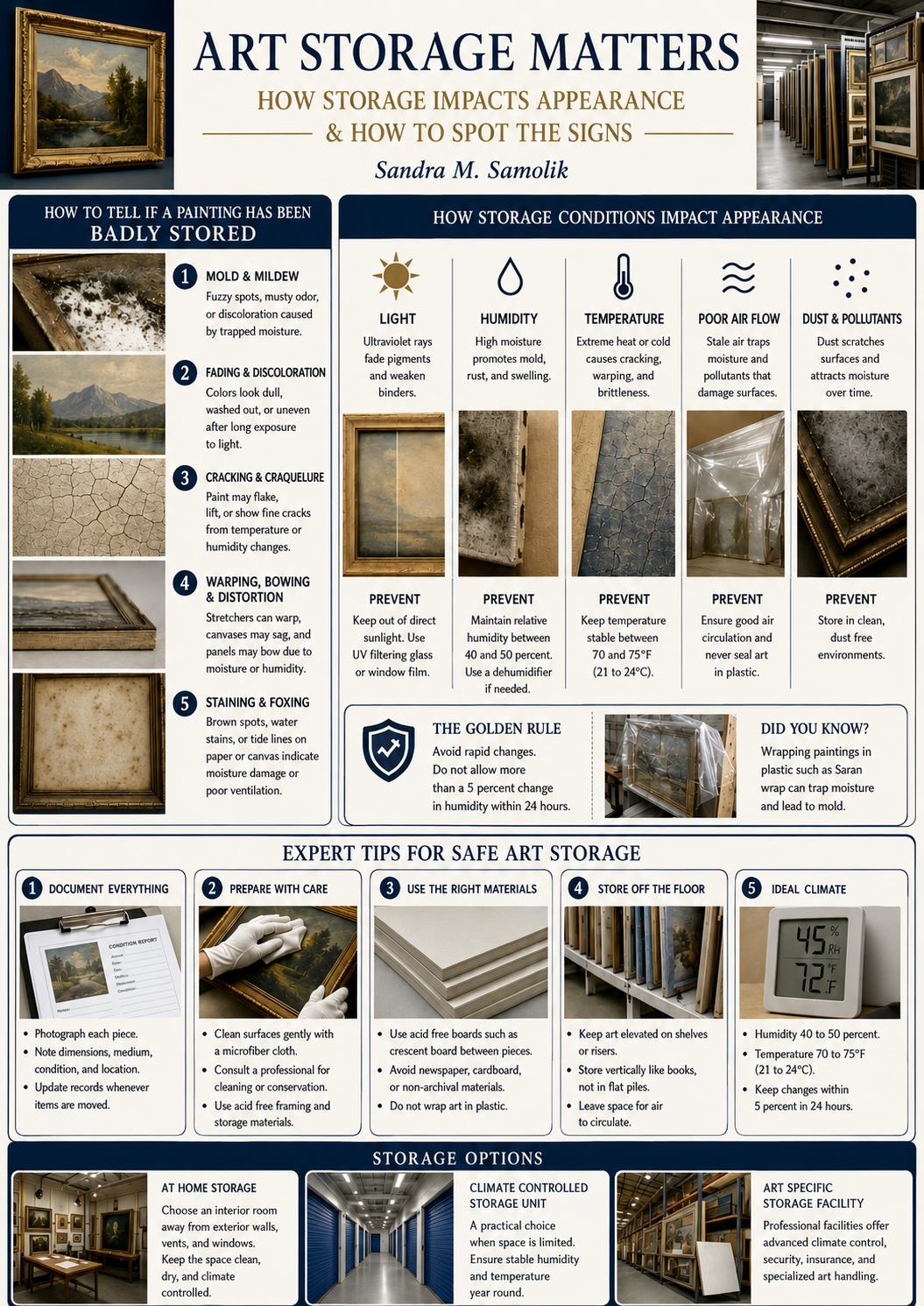
Storage conditions often leave measurable traces on works of art. Changes in humidity, temperature, light exposure, airborne pollutants, and improper handling can alter the appearance of paintings, sometimes permanently. Cracking, warping, mold, discoloration, staining, and deformation are not always signs of age alone. They may also provide valuable evidence about an object's environmental history.
Can storage history be read from the surface of a painting?
Storage conditions often leave measurable traces on works of art. Changes in humidity, temperature, light exposure, airborne pollutants, and improper handling can alter the appearance of paintings, sometimes permanently. Cracking, warping, mold, discoloration, staining, and deformation are not always signs of age alone. They may also provide valuable evidence about an object's environmental history.
For conservators, conservation scientists, art historians, and technical art researchers, recognizing these patterns is an important part of condition assessment. Understanding how storage environments influence an artwork helps distinguish natural aging from preventable deterioration and supports more informed conservation decisions.
© 2026 Sandra M. Samolik. All rights reserved. Text and figures on this page may not be copied, downloaded, or redistributed without prior written permission.