Pigments, Binders, Varnishes, and Artists’ Materials
Authentication Process: Physical Examination
Physical examination is one of the most important starting points in the analysis or authentication of a painting.
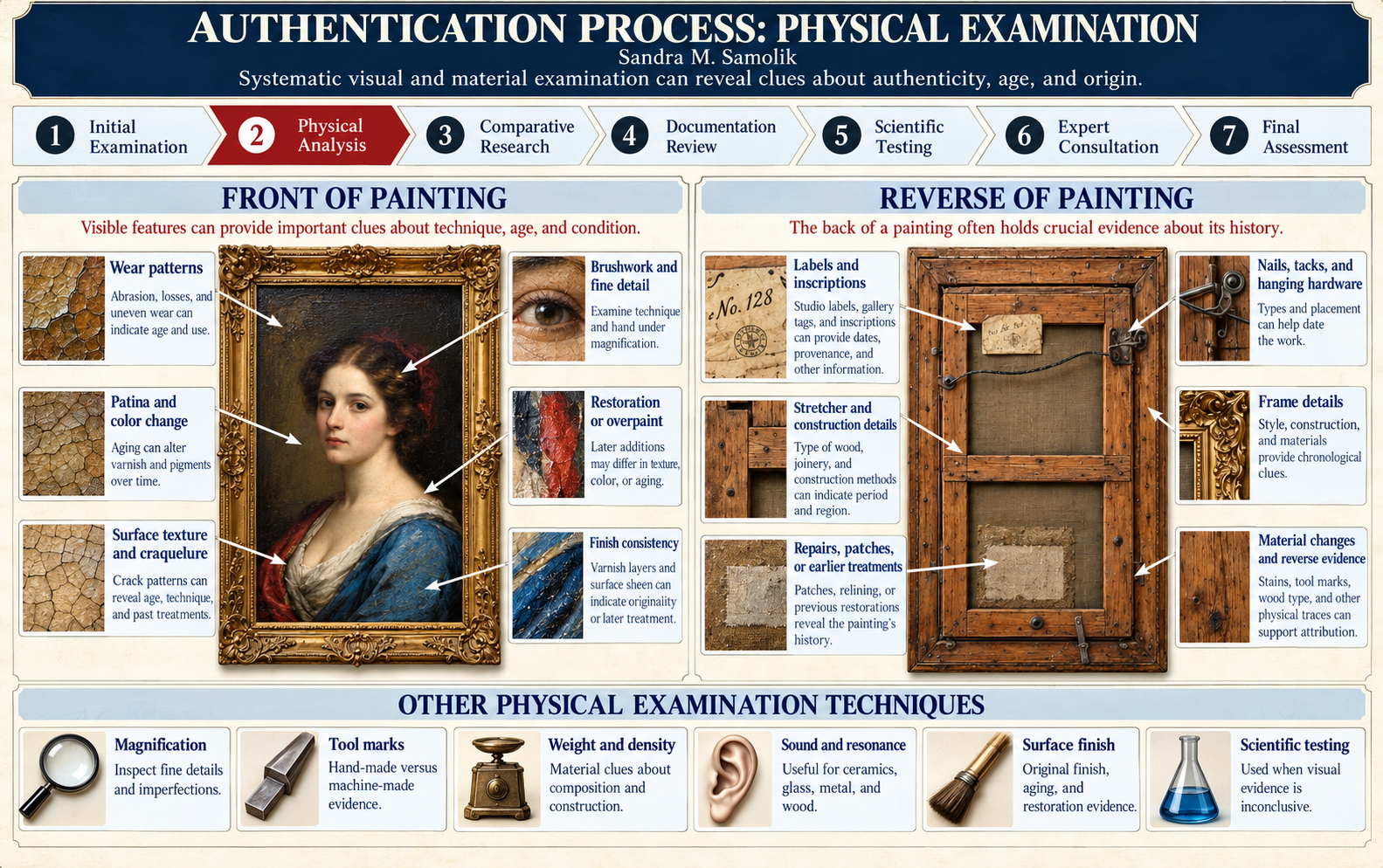
Before scientific testing begins, the object itself can already provide a considerable amount of evidence. The front may reveal wear patterns, craquelure, surface texture, brushwork, overpaint, restoration, and changes in varnish or color.
The reverse can be equally informative, preserving labels, inscriptions, stretcher construction, repairs, patches, nails, hanging hardware, frame details, stains, and tool marks. These physical traces can help establish chronology, identify later interventions, reconstruct an object’s history, and determine which questions require further investigation.
Importantly, no single physical characteristic proves authenticity. Material evidence should be considered together with provenance research, comparative analysis, documentation, scientific examination, and specialist expertise. Sometimes the smallest details on the front or the information hidden on the back become the most useful clues.
© 2026 Sandra M. Samolik. All rights reserved. Text and figures on this page may not be copied, downloaded, or redistributed without prior written permission.