Pigments, Binders, Varnishes, and Artists’ Materials
Alizarin Yellow
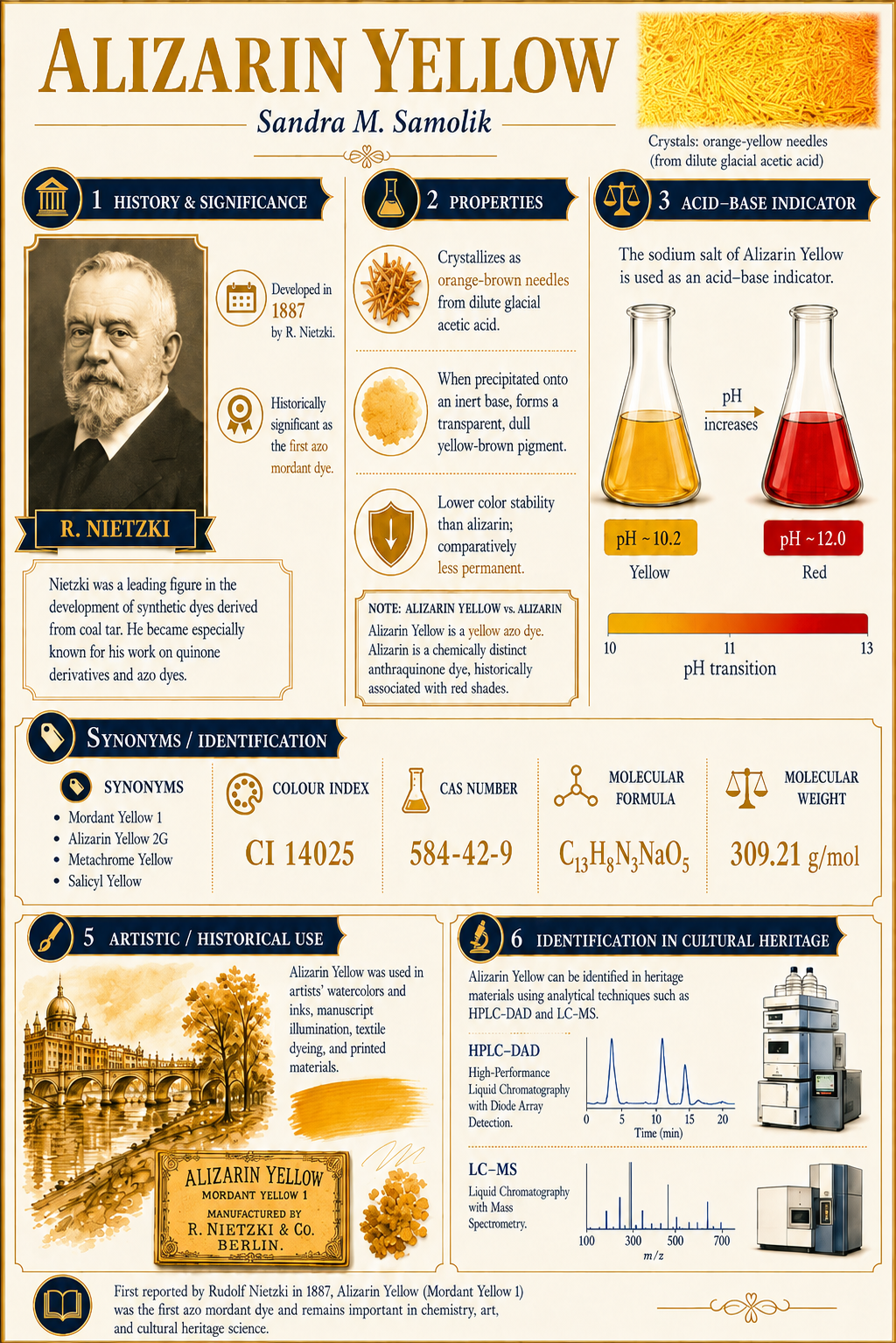
Alizarin Yellow: a synthetic dye with a surprisingly complex history.
Developed in 1887 by Rudolf Nietzki, Alizarin Yellow became historically significant as the first azo mordant dye. Nietzki was a leading figure in the development of synthetic dyes derived from coal tar and became especially known for his research on quinone derivatives and azo dyes.
Despite its name, Alizarin Yellow is chemically distinct from alizarin. Alizarin Yellow is an azo dye, while alizarin is an anthraquinone dye traditionally associated with red tones.
Alizarin Yellow forms a transparent, dull yellow-brown pigment when precipitated onto an inert base and has comparatively lower color stability than alizarin. Its sodium salt is also used as an acid-base indicator, appearing yellow at approximately pH 10.2 and red at approximately pH 12.0.
In cultural heritage research, dyes such as Alizarin Yellow can be investigated using analytical techniques including HPLC-DAD and LC-MS, helping researchers identify materials and better understand the history and composition of artworks and historic objects.
© 2026 Sandra M. Samolik. All rights reserved. Text and figures on this page may not be copied, downloaded, or redistributed without prior written permission.