Pigments, Binders, Varnishes, and Artists’ Materials
Aging vs. Drying Craquelure patterns
Craquelure is not simply a sign of “old paint.” Its pattern can reveal important clues about how and when cracks formed.
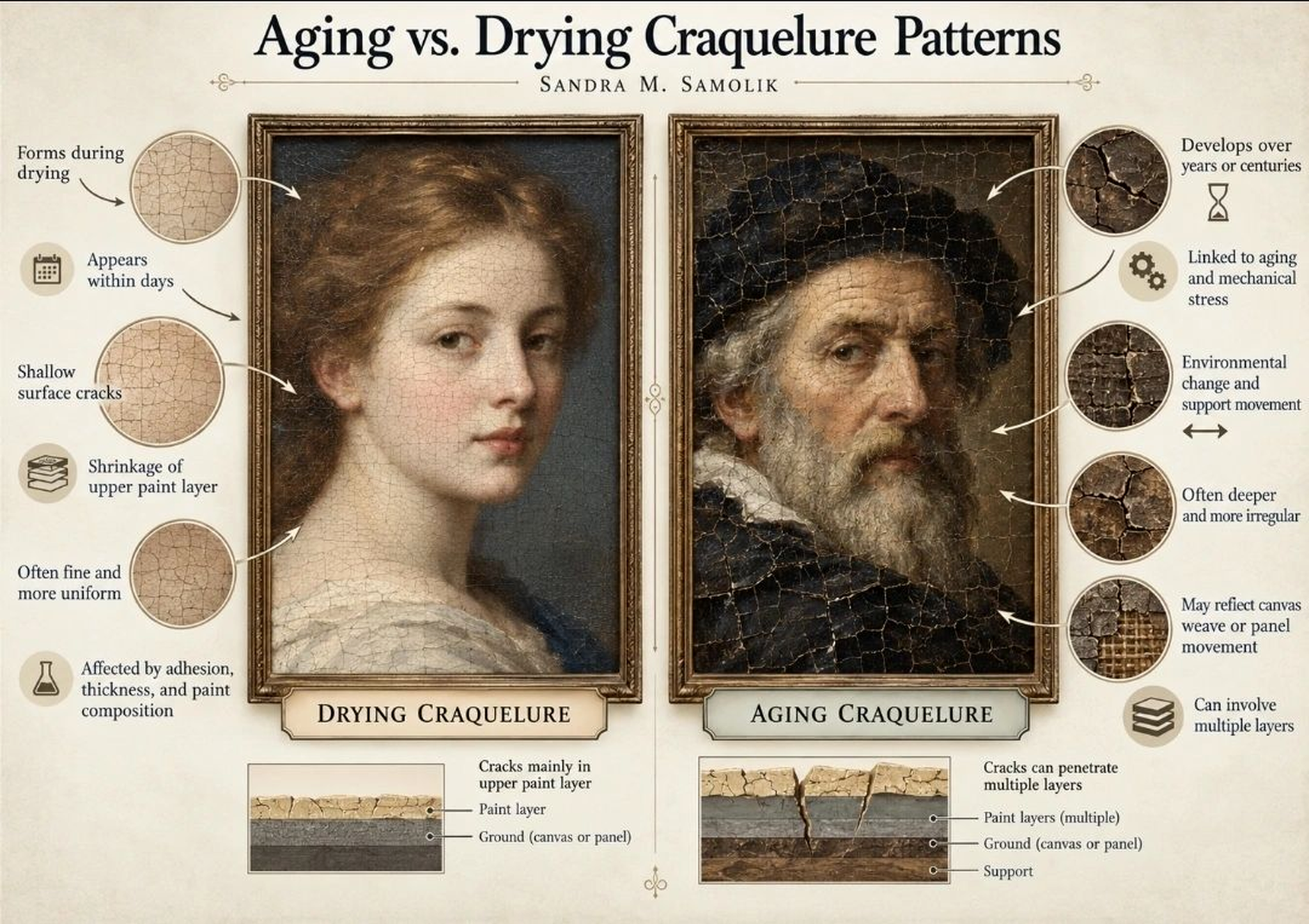
Drying craquelure develops during the early stages of paint-film formation, often as the upper paint layer shrinks and stresses build while solvents evaporate. These cracks tend to be relatively shallow and are strongly influenced by paint composition, thickness, adhesion, and the properties of the underlying layer.
Aging craquelure develops gradually over years or centuries. It is associated with the long-term mechanical behavior of the entire painting structure, including environmental fluctuations, movement of the canvas or panel, and changes within multiple paint and ground layers.
Looking closely at the shape, depth, distribution, and relationship of cracks to the underlying structure can therefore provide valuable information about an artwork’s materials, technique, condition, and history.
Craquelure should never be interpreted in isolation, but as one piece of evidence within the broader technical examination of a painting.
© 2026 Sandra M. Samolik. All rights reserved. Text and figures on this page may not be copied, downloaded, or redistributed without prior written permission.